Here's What It Changes for Everyone Else Building in This City
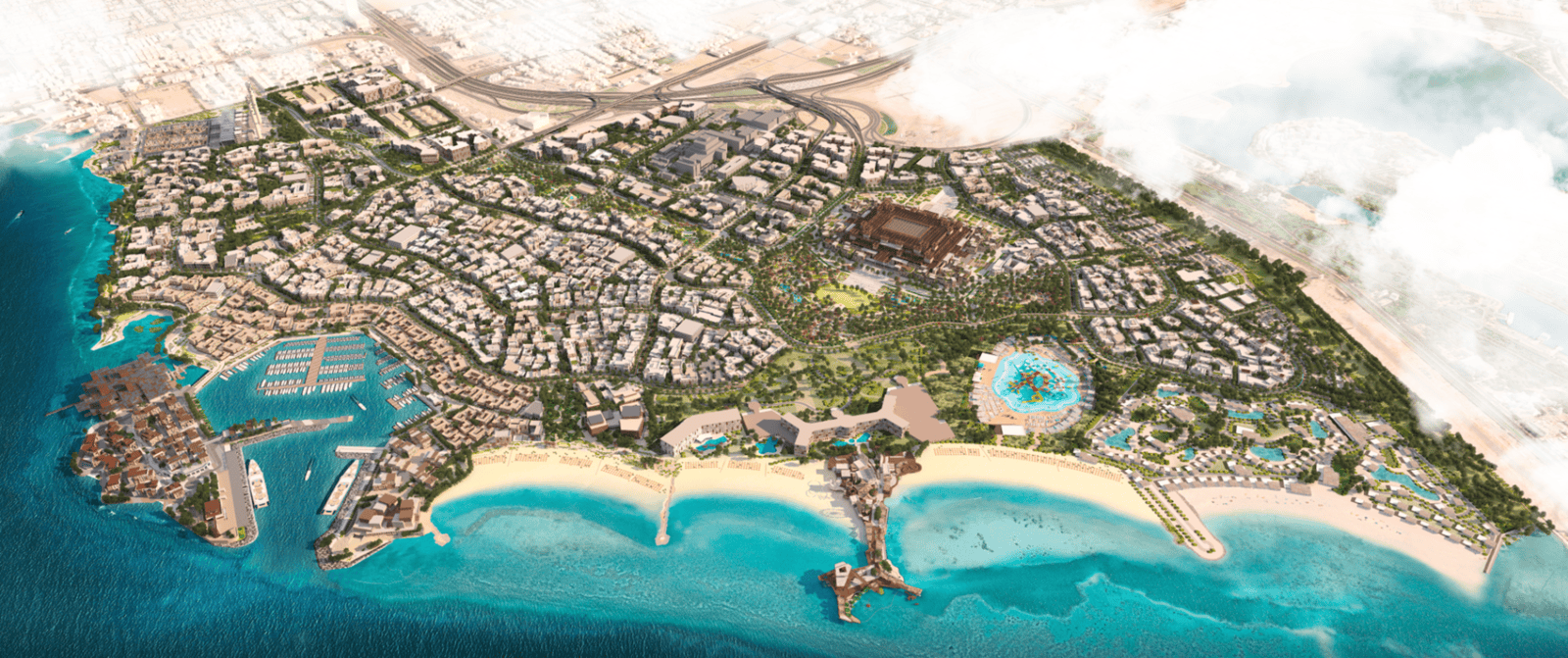
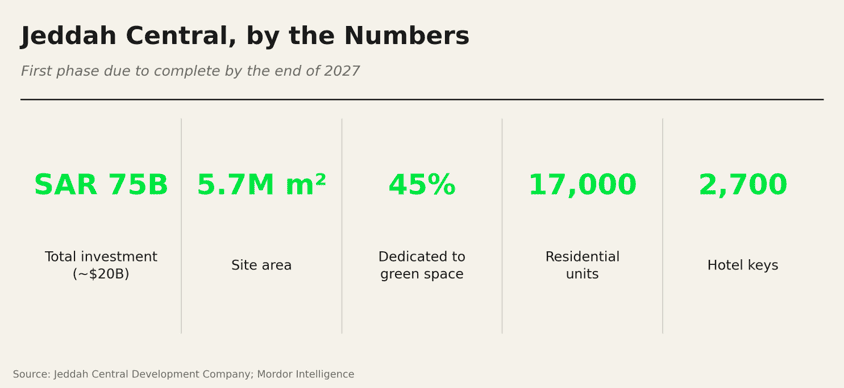
Jeddah Central is a SAR 75 billion (roughly $20 billion) waterfront development spanning 5.7 million square meters in the heart of the city, with 45% of the site set aside as green space. It includes an opera house, a museum, a stadium, an oceanarium, a marina, and a 9.5-kilometer waterfront, alongside roughly 17,000 residential units and about 2,700 hotel keys. The first phase is due to complete by the end of 2027, and the project is projected to add SAR 47 billion to GDP and create 25,000 jobs by 2030.
What's worth paying attention to, for anyone running a commercial or hospitality project anywhere else in the city, is what a project at this standard does to the expectations of everyone building around it.
What's Actually Inside It
The site is organized into six connected districts, and the mix matters more than the topline size — this isn't a single hotel-and-mall complex, it's a cross-section of nearly every asset type Jeddah's commercial market builds:
• The Waterfront District — a 2.1 km public beach and a marina built to receive yachts from inside and outside the Kingdom, reconnecting the city to the Red Sea coastline it sits on.
• A creative and cultural hub built around the city's former seawater desalination plant, preserved and converted into a museum of industrial heritage.
• A medical and health district around King Abdullah Armed Forces Hospital, developed into clinics and research facilities.
• Residential neighborhoods delivering roughly 17,000 housing units alongside administrative and business space.
• Hospitality and leisure anchors — including the opera house, museum, and stadium — built to draw both residents and visitors, not just hotel guests.
The Spillover Effect
Jeddah's real estate market has, by most current analysis, moved past the announcement-led optimism of a few years ago and into a more delivery-focused phase, with major initiatives progressing from planning into visible execution. That shift changes what clients expect from every project, not just the giga-projects.
Two things are compounding this. First, capital markets reform: Saudi Arabia's REIT regime now requires the majority of fund assets to sit in developed, income-generating property, and February 2025's Investment Law removed licensing barriers for foreign investors — both of which pull institutional, transparency-minded capital into Jeddah's market and raise the documentation and quality-assurance bar that owners expect from a delivery partner. Second, brand pressure: international hospitality operators are already positioning ahead of the city's growth, with debuts like the Jeddah EDITION and new signings from IHG signaling that global brand standards are arriving in Jeddah regardless of whether a given project sits inside a giga-project boundary.
The practical effect is that a stand-alone office building, retail unit, or boutique hotel in Jeddah today is increasingly benchmarked against the finish quality, documentation, and delivery discipline of projects like this one — even though its budget and scale are nowhere close.
What This Means If You're Building Elsewhere in Jeddah
• Expect higher scrutiny on documentation and QA, even on smaller projects. Institutional landlords, REIT-linked capital, and brand operators are all applying giga-project-level standards to due diligence, regardless of project size.
• Budget for a design and fit-out standard that didn't exist in this market five years ago. “Good enough for Jeddah” is a moving target, and it's moving upward quickly.
• Pick a delivery partner who can show, not just claim, formal process. As the market professionalizes, the gap between contractors who can produce real documentation and QA records and those who can't becomes a genuine differentiator, not a formality.